
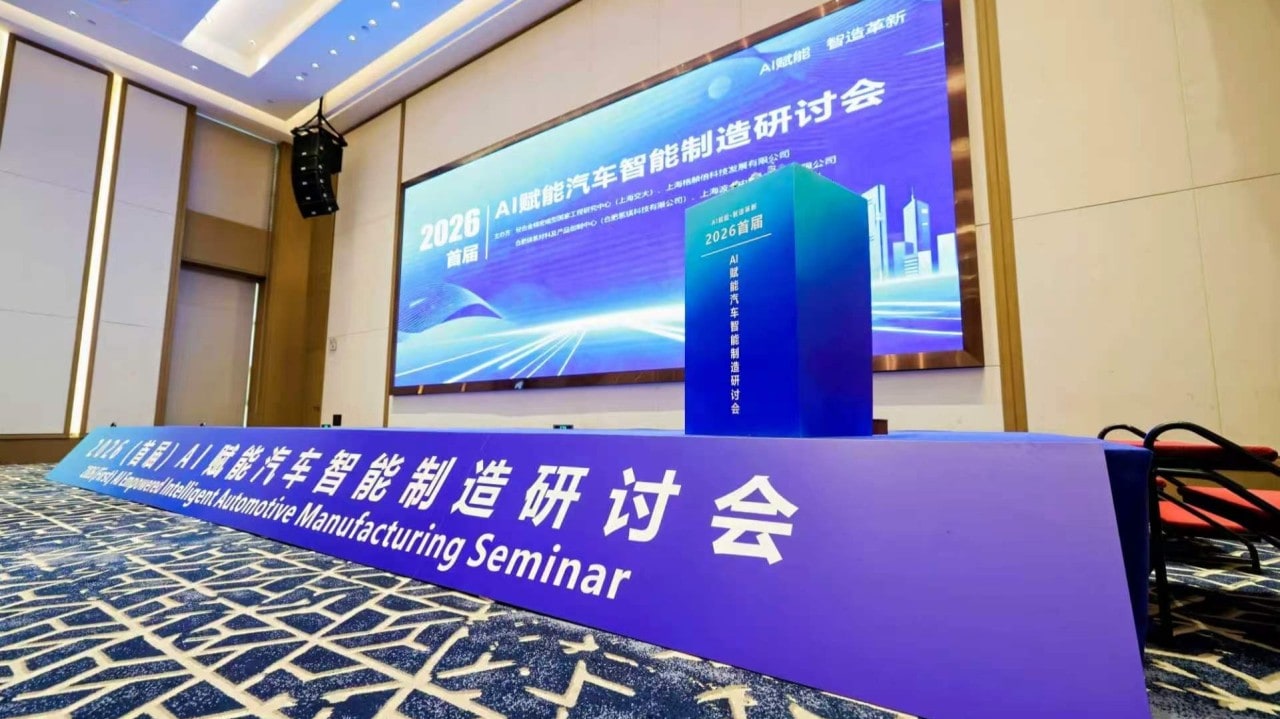
KnowFab was represented with its own technical contribution at the first AI Empowered Intelligent Automotive Manufacturing Seminar in Hefei and Chaohu on April 24, 2026. For us, the event was an important step in bringing our perspective from Germany into an internationally connected industrial environment.
The symposium took place in China's Anhui province and brought together research, industrial application, process knowledge, and AI methods. The focus was on concrete challenges in automotive manufacturing: from digital process models, welding and painting processes, and SPR joints to light-metal die casting.
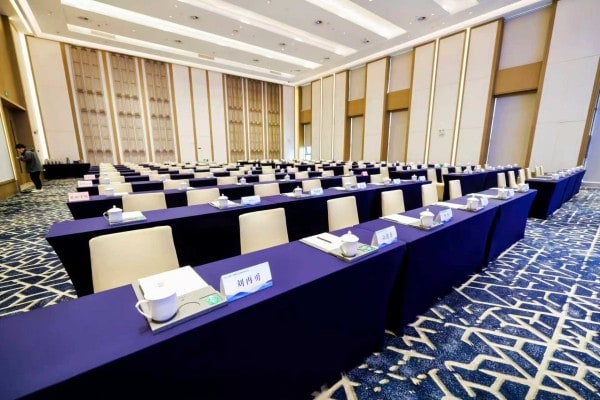
An environment with high industrial relevance
Participating organizations included the National Engineering Research Center for Precision Forming of Light Metals at Shanghai Jiao Tong University, the Hefei Magnesium Materials and Products Innovation Center, Shanghai Gelinei Technology Development Co., Ltd., and Shanghai Ballsnow Ltd.
The Hefei and Chaohu region has developed into an important automotive and innovation cluster in recent years. OEMs such as JAC Motors, NIO, BYD, Volkswagen Anhui, Changan Automobile, and Ankai Automobile shape the industrial environment, complemented by suppliers, universities, research centers, and technology companies.
Contributions from research, industry, and application
The agenda showed the broad technical scope of the symposium. Contributions included:
- Kan Rui, Deputy Mayor of Chaohu City: opening speech.
- Zhao Peng, Deputy General Manager and Technical Director, Shanghai Gelinbei: AI-supported intelligent automotive manufacturing, technology development, application landscape, and future outlook.
- Nie Zhenkai, Head of Innovation Planning, Manufacturing Technology and Management Center, Geely Automobile: planning and application of AI in manufacturing process development.
- Wu Chenmou, PhD, Jeonbuk National University, South Korea: contribution on AI-supported manufacturing systems.
- Hong Li, Managing Director, Shanghai Ballsnow: AI agents for supporting intelligent manufacturing systems and AI-supported intelligent control of welding processes.
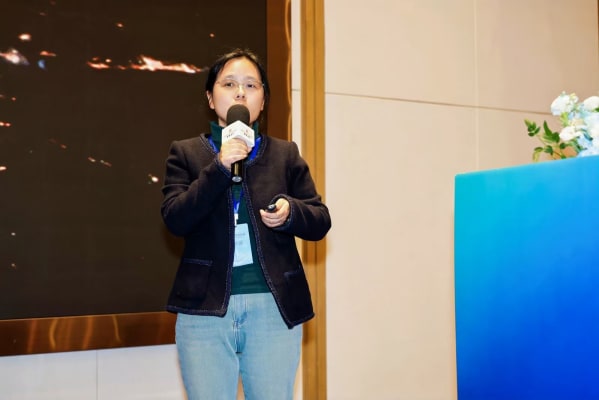
- Liu Lianchao, Product Director Painting, Shanghai Gelinbei: AI-based applications and development in automotive electrocoating.
- Dr. Lai Zhongyuan, PhD Physics, Germany, Chief Algorithm Scientist, Shanghai Ballsnow: optimal parameter recommendation based on Bayesian multi-objective optimization.
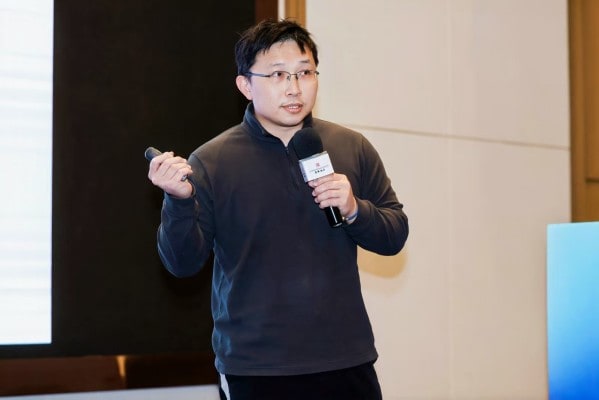
- Wang Hao, Senior Painting Engineer, Shanghai Gelinei: intelligent application technologies for vehicle painting across the full lifecycle.
- Zhang Caiyang, Head of Electrical Engineering, Shanghai Gripp Intelligent: use of innovative AI technologies in the SPR process.
- Tom Suesskind, CEO KnowFab GmbH, formerly IT Planning Body Shop, Porsche plant: use of AI in quality process control for spot welding.
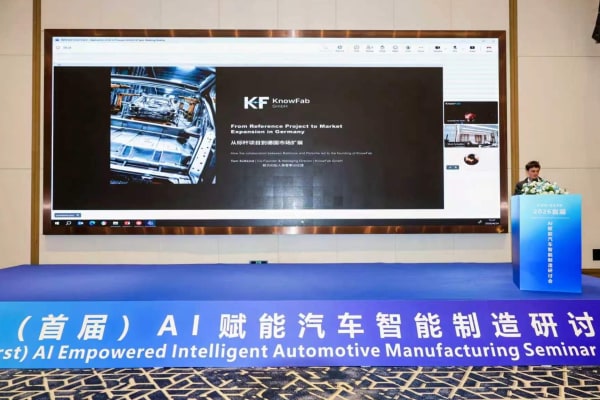
- Wang Xingchen, research associate, National Engineering Research Center for Precision Forming of Light Metals, Shanghai Jiao Tong University: research and outlook on the intelligent transformation of light-metal die casting.
- Hu Qiulin, Senior Painting Engineer, Shanghai Gelinbei: practical examples for simulating vehicle baking processes and developing an intelligent management system for baking processes.
KnowFab contribution on quality process control
Our own contribution fit directly into this environment. The central question was how quality can be derived, explained, and prospectively predicted more effectively from process data.
This is exactly where KnowFab comes in: we develop AI solutions for industrial quality, inspection, and joining processes. Our focus is not on abstract demonstrators, but on applications in real manufacturing processes, with real components and results that can be used by engineering, quality, and production teams.
AI must create measurable value in production. It must help teams understand processes better, assess quality more reliably, and make decisions on a stronger basis.
KnowFab
Why this matters for KnowFab
Our participation shows that KnowFab is active from the beginning in an environment where industrial AI, manufacturing expertise, and concrete use cases come together directly. This exchange is especially valuable for joining processes because quality decisions never arise from a single signal alone.
For KnowFab, the symposium confirms our own approach: AI in manufacturing needs data, but also process understanding, technical framing, and explainable results. Only then can digital assistance systems build trust in everyday industrial work and be used sustainably.
- Quality decisions should become more explainable from process data.
- Joining processes need a combination of data analysis and technical context.
- International industry and research partners are jointly advancing intelligent manufacturing systems.
- KnowFab contributes its perspective from Germany to this exchange.
Next step: application in real processes
Our ambition remains clear: AI should not only detect patterns, but improve industrial decisions. This requires robust models, understandable result paths, and a close connection to the realities of manufacturing processes.